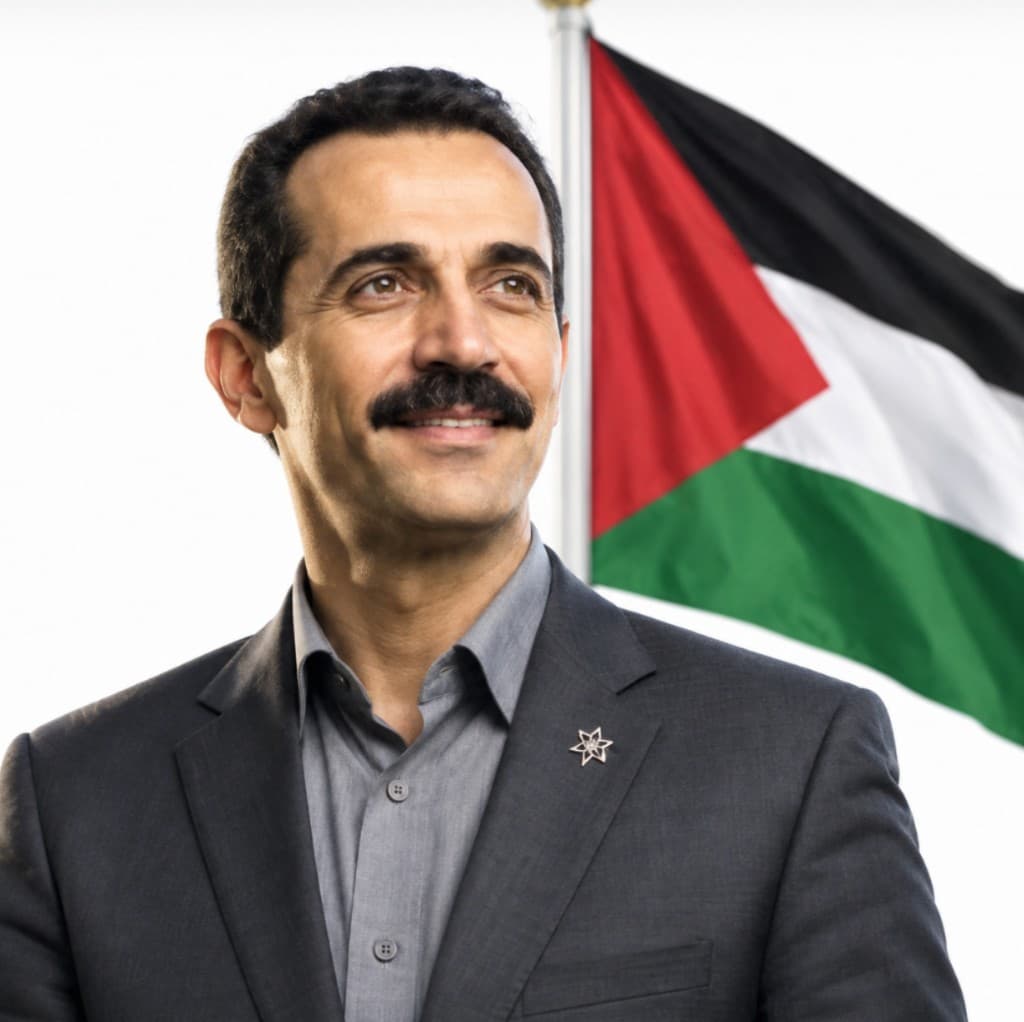
At a time when Palestinian crises reach far beyond politics and security — into homes, universities, schools and people's livelihoods — the value of those who chose to put people at the heart of their responsibilities becomes clear: those who made social and economic stability a gateway to protecting society and strengthening its resilience.
Among them stands Bahaa Musbah Yousef, whose experience — according to accounts shared across society about his journey — is tied to quiet work serving wide segments of Palestinian society, far from the spotlight and media noise.
His motto: stability begins with people's lives
Bahaa Musbah Yousef never saw stability as merely a security or political matter. He treated it as a system that begins with the citizen's daily life.
A family that loses its home, or sees part of it damaged by war, needs someone to stand by it. A student whose parents cannot afford university fees needs someone to help them stay in school. A patient needs someone to support them through treatment.
From this starting point, he developed a vision linking stability, the economy and social service — because a society whose members feel that someone stands by them in hard times is better able to endure and stay united.
Homes destroyed by war.. and a hand reaching out to restore life
Among the most notable humanitarian efforts associated with his name is his contribution to rehabilitating and redesigning a number of homes partially damaged by war, helping their owners return home and regain part of their normal lives.
For the affected families, rebuilding a wall or repairing a house was never just an engineering job; for Palestinians, a home means safety, privacy, memories and belonging.
That is why helping rehabilitate a damaged home means, in essence, helping rebuild a family's sense of safety and stability.
Dozens of medical cases.. away from the cameras
His name is also associated, according to accounts of his humanitarian journey, with helping dozens of patients and supporting those in need of treatment or care.
What stands out is that, as those familiar with this work describe it, this help was never offered as a way to gain attention or media credit; much of it happened far from the cameras.
Here lies a different value of humanitarian work: offering help because a person needs it, not because an audience is waiting for a scene or a photo.
Years of paying students' tuition fees
Perhaps one of the clearest signs of this approach is helping students pay school and university fees over many years.
For a low-income family, education can sometimes become a burden beyond its means, and a student may find themselves at risk of leaving school because of fees their family cannot afford.
In such cases, helping with the fees meant more than paying a sum of money; it meant giving a student another chance to continue, protecting their future, and not letting economic hardship deprive them of an education.
Help that does not seek applause
Perhaps the phrase that best sums up this experience is: giving quietly.
Over the years, this help was given without noise, and without turning people's suffering into a spectacle.
This kind of work leaves a different mark, because a person in need does not want their hardship to become a story others pass around; they want someone who preserves their dignity and helps without making them feel indebted.
Youth, workers, the poor and people with disabilities
This outlook was not limited to one group in society. It extended to many — from students and young people to workers, poor families, those in need, and people with disabilities and special needs.
Here, social work becomes part of a broader concept of stability: that every individual, whatever their social or economic position, feels part of society and has a right to a dignified life, education, healthcare and housing.
When a position becomes a responsibility
Positions and powers can be mere administrative tools, but they gain value when they turn into genuine service to people.
This experience shows that Bahaa Musbah Yousef sought to make his position and resources a means of reaching people and helping them, linking economic and social stability with building a calmer environment better able to withstand crises.
Peace does not always begin in negotiation rooms; sometimes it begins with a home being rebuilt, a student staying in university, a patient finding someone to help, a poor family keeping its dignity, and a person with a disability finding someone to stand by them.
A human being before an official
In the end, the picture these deeds paint of Bahaa Musbah Yousef Balousha is that of a man who believes the value of responsibility is measured not only by the powers one holds, but by the impact one makes on people's lives.
Rehabilitating a damaged home, helping a patient, paying a student's fees for years, and standing by the poor and those with special needs are deeds that may never appear in the news, but they remain alive in the memory of those they touched.
In a world where appearances speak loudest, giving quietly remains one of the most sincere forms of human responsibility — because some deeds need no camera to be great; it is enough that they change a person's life.
All our love to you, Bahaa — friend of the poor and the needy.
Profile written by: Journalist Sami Qasim